On Isle of Palms, the Flood Insurance Clock Starts Before You Think It Does
August 27, 2026
August 27, 2026
Ask any agent who has closed a deal on Isle of Palms what actually derails a contract, and the flood zone itself rarely comes up. Buyers who make it this far already know they are buying on a barrier island. What catches them is the calendar. Flood insurance through the National Flood Insurance Program does not turn on the day you sign. The City of Isle of Palms states plainly on its own emergency preparedness page that there is a thirty day waiting period after application before flood insurance coverage becomes effective. If your closing date lands inside that window and you started the application late, you are closing on a house you cannot yet insure.
That single fact reframes almost everything else worth knowing about buying here. The flood zone map tells you what you are dealing with. The calendar tells you whether you handled it correctly.
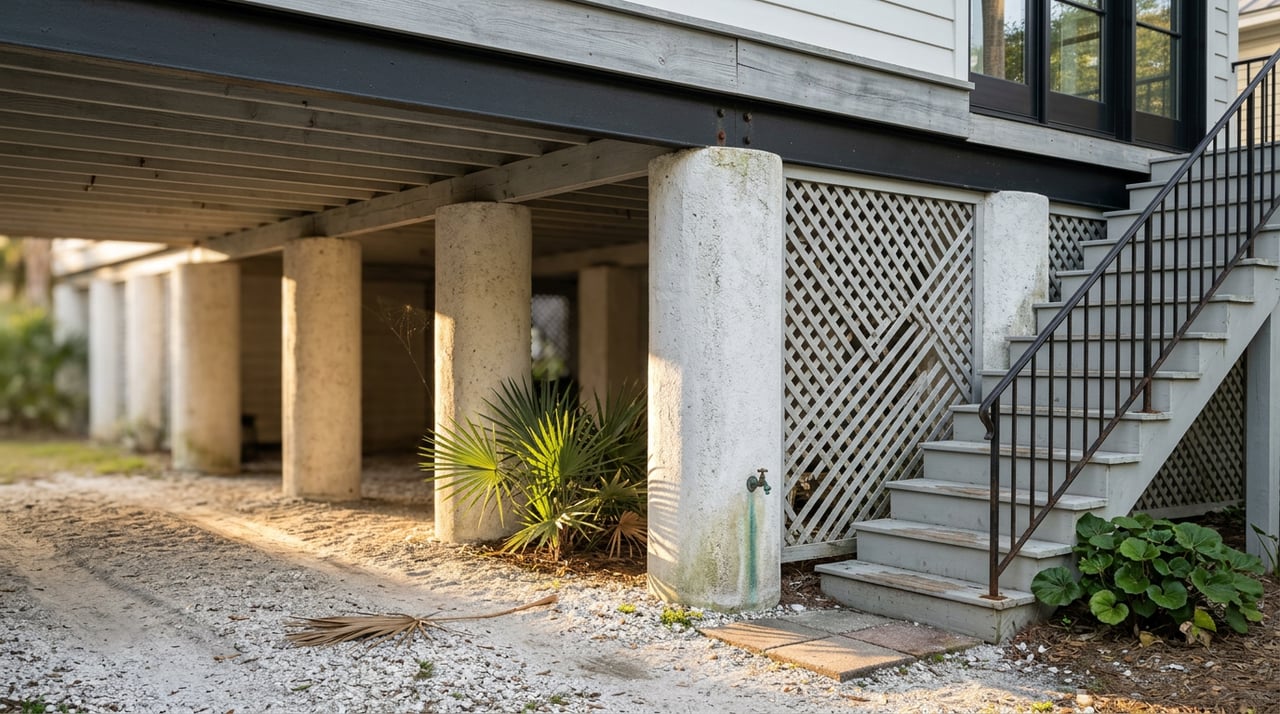
Isle of Palms sits low enough that the city's own flood information page puts it plainly: because the island is a barrier island with low elevation above sea level, a property is either in or very near a flood plain. Two zone letters do most of the work in determining what that means for a specific address. A Zone means the property sits within the Special Flood Hazard Area but faces rising water without wave action. V Zone means the property faces that same rising water plus wave action, which is a meaningfully different engineering and insurance problem.
That distinction is not academic. New construction and additions in a VE zone require construction drawings stamped by a licensed architect or engineer, plus a V-zone certification on the plans, according to the city's flood damage prevention ordinance. AE zone projects typically carry the same architect-stamp requirement unless the building official specifically exempts the work. If you are buying a lot to build on, or a home you plan to substantially renovate, the zone letter on the flood map decides who has to sign your plans before the city will issue a permit.
Here is the detail that trips up even buyers who did their homework. New Flood Insurance Rate Maps became effective for Isle of Palms on January 29, 2021. That update did more than redraw lines. It changed the vertical reference point the maps are built on, from the National Geodetic Vertical Datum of 1929 to the North American Vertical Datum of 1988. The new reference point sits roughly one foot lower. The city's own ordinance page spells out the practical result: an elevation requirement of 13 feet on an older flood map is the same physical elevation as 12 feet on the newer maps.
If a seller hands you an elevation certificate dated before 2021, the number on that document is not wrong, but it is written against a different yardstick than the one your insurer and lender will use today. Comparing an old certificate straight across to current requirements without adjusting for the datum shift can make a compliant home look like it falls short, or make a marginal home look fine when it is not. This is precisely the kind of paperwork mismatch a buyer moving from out of state, reading unfamiliar documents on a compressed timeline, is positioned to miss.
Isle of Palms did not stop at matching the federal minimum. City Council added a local requirement of one additional foot of elevation above whatever the FIRM demands, specifically because it improves the city's Community Rating System score and unlocks a flood insurance discount for property owners. Because the datum shift meant most elevation requirements would have technically dropped, the council went further and set a minimum finished floor elevation for new construction of at least 14 feet above mean sea level.
Read that as a collective bet rather than an isolated rule. The city is asking every new build to absorb a higher construction cost today in exchange for a better CRS class and cheaper flood premiums for everyone on the island tomorrow. If you are comparing a 2024 build against a 1998 cottage two lots over, the newer home is not just taller for aesthetic reasons. It is carrying the island's insurance strategy on its foundation.
That same ordinance caps what an existing home can absorb before it has to comply with current elevation standards. A structure is considered substantially improved once the cost of the work reaches fifty percent of the appraised value of the structure itself, excluding the lot. On a home appraised at $100,000, that ceiling is $50,000 in improvements before the substantial improvement review kicks in. Anyone eyeing a lower, older cottage as a renovation project should run that math before falling in love with the floor plan.
Charleston County had 27,269 active NFIP flood insurance policies as of August 2026, with an average annual premium of roughly $902, according to county-level data pulled from FEMA's own policy records. Only about one in six households across the county carries flood coverage at all. That average is doing a lot of quiet work. It is blended across a county where most properties sit outside any mapped flood hazard and never need a policy in the first place.
Isle of Palms does not get to participate in that blend. The city's own emergency preparedness page counts more than 3,675 separate flood insurance policies in effect on the island alone, covering in excess of $650 million worth of property, on a barrier island where the flood zone touches nearly every parcel. A county-wide average premium built mostly from unmapped, uninsured inland homes tells you almost nothing about what a mortgage lender will require you to budget for on 41st Avenue or Ocean Boulevard. The number that matters is the one specific to your elevation certificate, your zone, and your foundation type, not the number a general market report hands you.
FEMA's current pricing methodology, known as Risk Rating 2.0, prices each policy using the home's replacement cost, elevation, foundation type, distance to water, and flood type rather than the zone letter alone. An elevation certificate is technically optional under this system, but if FEMA's default elevation estimate for your address is off, ordering one can move your premium meaningfully. Premiums that are still catching up to a property's true risk profile are capped by federal rule at an 18 percent increase per year, so a policy that looks manageable at closing can still climb for several years afterward.
If your property sits near the edge of a mapped zone, or on ground that has been filled or regraded since the last survey, it may be worth checking whether a Letter of Map Amendment applies before you assume the mapped zone is final. That process starts with an elevation certificate from a licensed surveyor, typically $300 to $600, demonstrating that the lowest adjacent grade or lowest floor sits above the base flood elevation. Filing the LOMA application with FEMA directly costs nothing; using a consultant to handle it typically runs $500 to $1,500. It is most often worthwhile for properties sitting on isolated higher ground within a broader flood zone, which does happen on parts of the island.
A short list worth requesting from any seller before you go firm on a contract:
None of this changes whether Isle of Palms is worth buying into. It changes whether your closing date and your insurance binder actually meet each other on time.
Does a new home built to the 14-foot standard still need flood insurance? Yes. The elevation standard reduces risk and can lower the premium, but any home with a federally backed mortgage in a mapped AE or VE zone still carries a mandatory flood insurance requirement.
Can I just use the seller's existing elevation certificate? You can start with it, but check the survey date against the January 2021 map update and the datum change. If it predates that update, have your agent or lender confirm whether the numbers still apply as written or need adjusting.
What happens if my closing date falls inside the 30-day waiting period? Talk to your lender and insurance agent as soon as you go under contract, not after inspections. Starting the flood insurance application the same week you sign the contract is the only reliable way to have a bound policy in hand by closing.
Buying on a barrier island rewards people who read the paperwork early and ask the second question, not just the first one. If you are weighing a purchase on Isle of Palms and want someone who already knows which documents to request and when to request them, Stephanie Clark can walk the timeline with you before you are up against it.
Stay up to date on the latest real estate trends.

Work With Stephanie